The first to appear here is a huge tree. It is symbolic of the world ash tree, Yggdrasil, which is central to Norse cosmology. Gods go to the world tree daily to assemble at their meetings. The imagery of the following scenes connects the characters of the series with various gods of Norse mythology. [continue reading…]
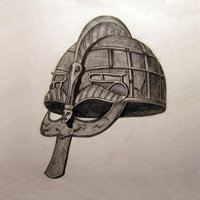
This blog is on Vikings and for Vikings. Warriors and traders from Nordic countries reached as far as North America, leaving lasting marks of their presence everywhere. In battle, Vikings feared nothing, eager to join Odin in his hall. They knew that valkyries chose who would die and become one of the einherjar in Valhalla.
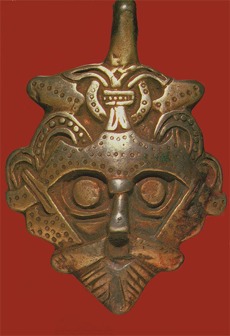 Gnezdovo is an important Varangian center of the ancient Russia that flourished between the 9th and 11th centuries. It is larger than the Viking Age settlements in Birka, Dublin and Ribe. Gnezdovo is perhaps second only to Hedeby, but its unique feature is that no later city is built on the site, so that excavations can be freely conducted. The site was surrounded by the semicircle of burial mounds (kurgans in Russian), up to amazing 6,000 in number, of which only 1,500 exist today, about 1,200 being excavated since 1867, when a treasure trove was discovered by chance on the site during railroad construction works. Since then, eight more treasures were found there. Gnezdovo is equivalent to Smolensk of the Russian annals and Miliniska mentioned by Constantine Porphyrogennetos in De Administrando Imperio from 950s (modern Smolensk is 12 km east of Gnezdovo). It may also be the same as Sýrnes described in Hauksbók, a 14th century Scandinavian geographical treatise. Sýrnes means “swine promontory” in Old Norse, and Gnezdovo is located on a promontory at the confluence of the rivers Dniepr and Svinets, the latter name being related to the Russian word for ‘swine’. [continue reading…]
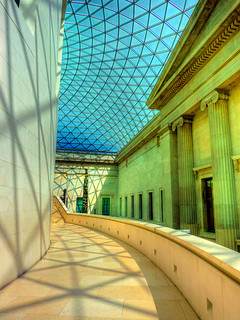 Vikings: Life and Legend will be the first significant exhibition on Vikings organized by the British Museum in about 30 years. The event, starting in March 2014, is supported by BP and will open the Sainsbury Exhibitions Gallery, expressly built to house such temporary activities. The incredibly rich collection of the Viking Age artefacts that will be displayed is from the British Museum’s own depository, as well as from other museums in the UK, Ireland and elsewhere. This amazing large-scale Viking event has been developed in partnership with the National Museum of Denmark and the National Museums in Berlin (Staatliche Museen zu Berlin). The exhibition catalogue

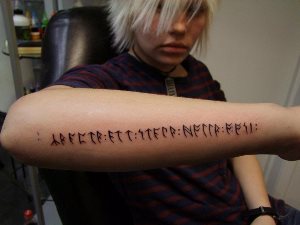 Developing a great design for a tattoo is critical in case you seriously plan to get inked. If you are about to have a Norse or Viking tattoo, I bet you want to include some Nordic runes into it. Tattooed inscriptions in foreign languages or written in unusual characters may well be a source of trouble, especially if you don’t know well the language or the writing system. Online translation tools may play a trick on you: a woman who wanted to have “I love David” in Hebrew on her back, later realized the actual tattoo said “Babylon is the world’s leading dictionary and translation software”. [continue reading…]
Nordic runes are writing systems developed by Germanic tribes. It is not certain whether the first Germanic runic alphabet was based on a preceding form of writing, for instance Old Italic alphabets. It may well be an original Nordic invention, since the oldest runic inscriptions were discovered in Northern Germany and Denmark. The word Futhark is derived from the first six symbols in the rune row. Runes were used to carve inscriptions on various objects as well as on large stones known as runestones. The branch of linguistics that studies runes is called runology. Runic alphabets were used before the adoption of the Roman letters by the North Germanic peoples and, for some limited purposes, for a long time after. [continue reading…]
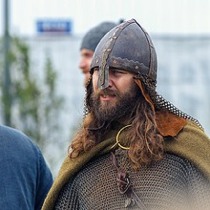 The Old Norse word saga is cognate to English say and German sagen (‘say’). Its meaning in Old Norse is ‘what is said’, ‘tale’, ‘story’, or ‘narrative’. Classical sagas (known as sagas of Icelanders) constitute a unique literary genre. On the one hand, the original listeners (many researchers believe that sagas had long been transmitted orally) were sure that sagas relate the very words and deeds of their ancestors. On the other hand, the events of the classical sagas took place between the 9th and the 11th centuries, which is at least two centuries earlier than the time they were first written down. It was hardly possible to relate accurately what happened two to four hundred years before that.
It is to note that the past of the inhabitants of Iceland was not distant and obscure: they knew that their ancestors had populated their homeland rather recently, and that the events of the ‘taking of the land’ (landnám) were still fresh in the memory of the society as a whole. However, it is not clear whether the authors of the sagas believed they simply told what had actually happened, with no fictional details. (It is not even clear if we can talk about the authors of the sagas at all: passing from generation to generation does not allow for the notion of a single author.) [continue reading…]