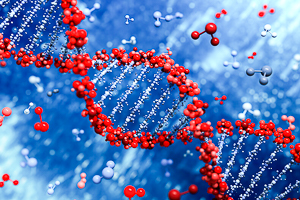
 Can we know if our ancestors were Vikings? The short answer is yes, we can. DNA testing may trace Viking background in our genetic makeup. However, Nordic ancestry cannot be proven or disproven in all cases. A few years ago, when I first got interested in genetic genealogy, I thought that there might be some sort of Norse gene that all Vikings transmitted to all their descendants as a heritage. So you are either positive or negative for it. However, it’s not that simple. This tutorial will explain it all about genes and genetic testing for those who’d like to find out if they have Viking roots. [continue reading…]
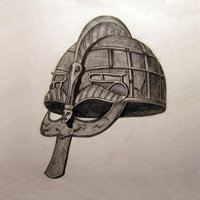
This blog is on Vikings and for Vikings. Warriors and traders from Nordic countries reached as far as North America, leaving lasting marks of their presence everywhere. In battle, Vikings feared nothing, eager to join Odin in his hall. They knew that valkyries chose who would die and become one of the einherjar in Valhalla.
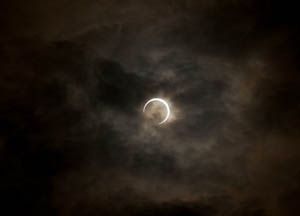 In Norse mythology Sun is a goddess named Sól. She rides a chariot created by gods to illuminate the nine worlds from the burning embers that come out of Muspelheim, the world of fire. Two horses named Early Awake and Very Quick draw the sun’s chariot. Giant wolf, of the species of monsters known as wargs, whose name is Treachery, is constantly chasing Sun’s chariot. [continue reading…]
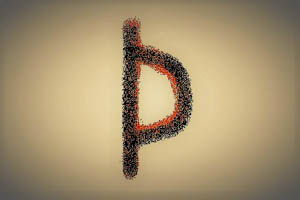 For years, I have been receiving questions like ‘What is the rune for Joy?’ or ‘What is the rune for Happiness?’. The point is, Norse runes aren’t ideograms. Normally, they do not stand for abstract notions like ‘happiness’ or ‘joy’. Neither are they logograms, that is, they do not stand for all kinds of words like ‘go,’ ‘bird,’ or ‘angry’, unlike Japanese kanji or Chinese Han characters. [continue reading…]
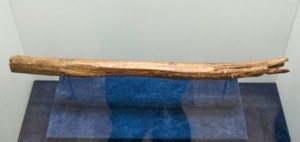 Recently I blogged about the Younger Futhark runes as a writing system, emphasizing insufficiency of only 16 runic symbols for 21 consonants and 38 vowels of the Old Norse language between the 9th and 12th centuries. The 16 runes of the Younger Futhark are about three times less than one would expect. Anglo-Saxons invented additional runes for the standard Elder Futhark set of 24 runes when the language changed and additional phonemes emerged. Scandinavians did to the contrary. It is not clear why. [continue reading…]
 About two years ago I received a request to write with runes a quote in Old Norse. This happens time and again since people find difficulty in substituting letters of the standard Old Norse orthography for the Younger Futhark runes. The request was for a 6 line stanza from Hávamál (Sayings of the High One): [continue reading…]
 People tend to believe that there is nothing more easy and natural than to write in Old Norse with runes. In reality it’s quite the opposite. The language that we know as Old Norse is the language of the sagas of Icelanders, which were written down in the 13th century. Strictly speaking, this language is classical Old Icelandic. In reality, Old Norse was constituted by dialects that existed at various places during several centuries. [continue reading…]